Quick answer
A software factory is a set of agents that plan, build, test and ship software around the clock while people steer from Slack. We pointed Nori's factory at games. OpenCoaster, tftft and dots were each built entirely with Nori in less than a week, with no one looking at the code at any point. All three are live and playable in your browser today.
Three games, built entirely by Nori
Each game went from an idea to a deployed, playable site on its own domain entirely through Nori, in less than a week, with no one looking at the code at any point. Agents did the building; people only played the results.
OpenCoaster
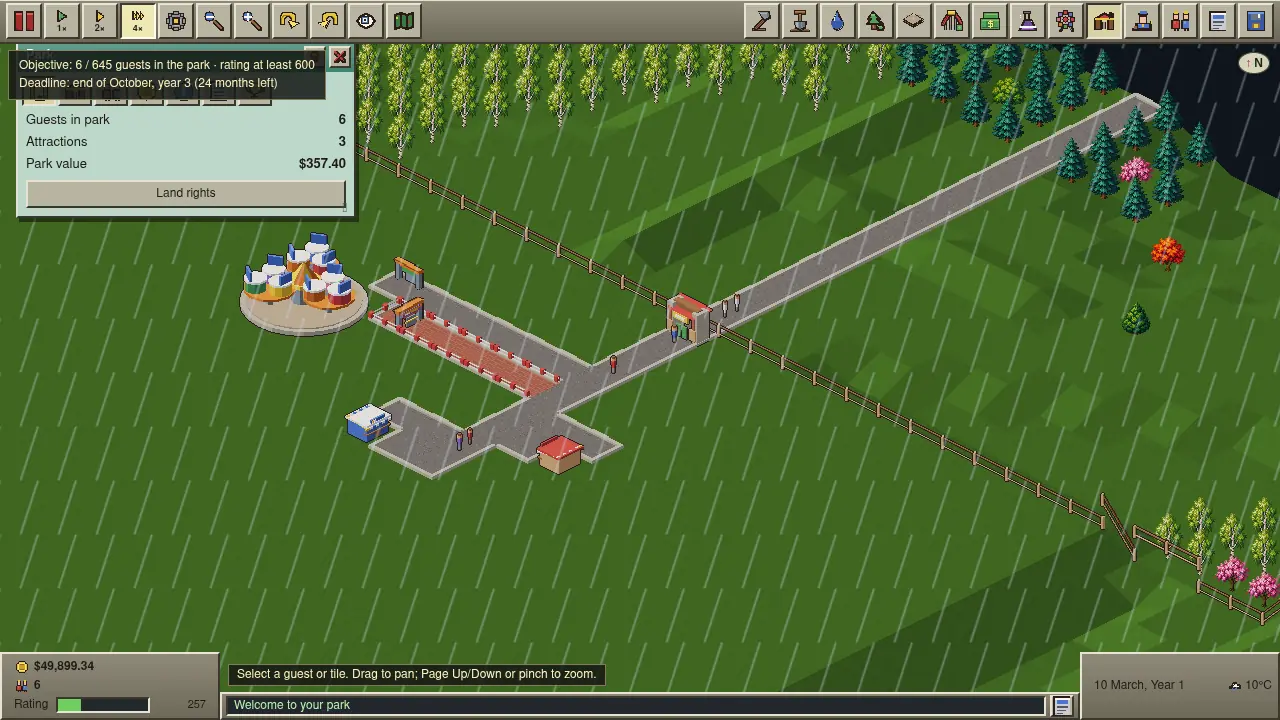
OpenCoaster is a browser-based theme park simulation: lay paths, build rides, keep guests happy and balance the books. It ships with scenario parks, a sandbox, saves and in-game finances. The source is open under the MIT license on GitHub, and the build story covers how the project coordinator ran it.
tftft
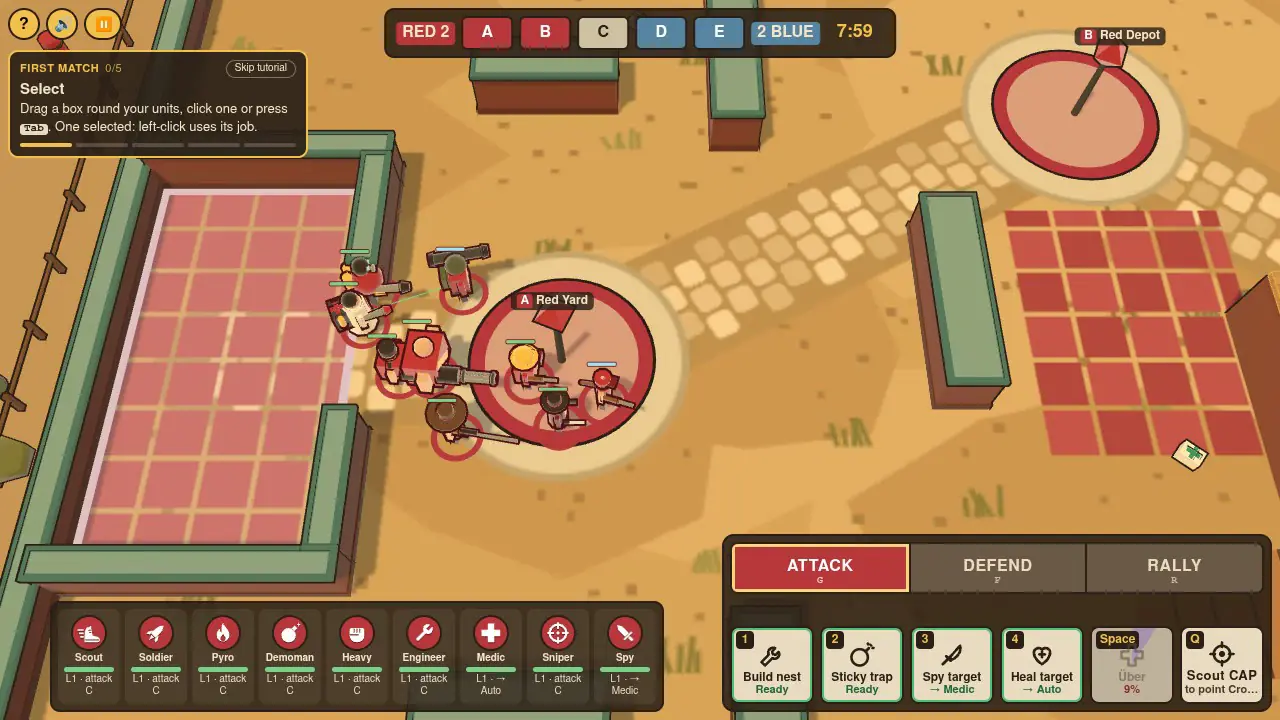
tftft is a top-down team tactics game: nine unit classes, five battlefields, control points, an AI opponent with three difficulty levels and online one-on-one matches through a room server. It has an adaptive score, a headless match simulator for balance runs and browser checks that drive the real game.
dots
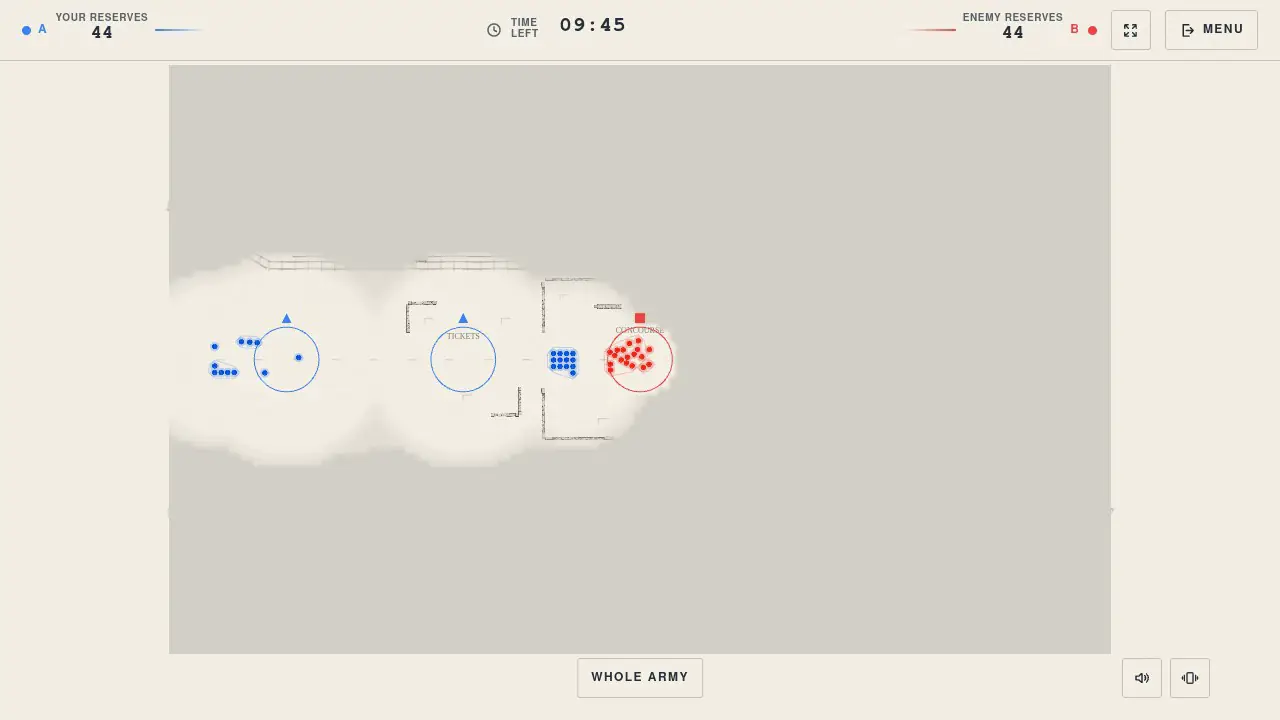
dots is a real-time tactics game drawn in ink, where your army is a swarm of identical dots and battles are won by how you move them. It has a campaign, six modes against three AI generals, private multiplayer rooms and replays, all on a deterministic simulation core.
How the factory works
A Nori software factory runs as a project. A project has a coordinator agent that holds the goal and the plan, shared project docs that every agent reads, and subworkers: full agents, each in its own isolated cloud machine, that take one task at a time.
- The coordinator plans and tracks. It breaks the brief into tasks, hands each to a subworker, reviews the result and keeps the project docs current, so no detail is lost between sessions.
- Subworkers build in parallel. One adds a ride type while another tunes the AI and a third fixes a rendering bug. Each opens its own pull request.
- Each task goes to the best harness. Nori runs Claude Code, Codex, Gemini CLI and other agents side by side, on your own subscriptions, so the coordinator can pick the right agent for each task.
- Tests are the reviewer. Unit tests, headless simulations and browser checks that play the real game gate every merge, so no person has to read the code.
- Automations keep it moving. Scheduled runs can play the latest build, file what broke and pick up the next task overnight.
People stay in Slack. They play the build on a phone, describe what feels wrong, and the coordinator turns that into tasks.
How to set up a game factory, step by step
- Create a repository and connect it to Nori through the GitHub app.
- Start a project and write a one-paragraph brief: the genre, the core loop, the platform and what done looks like.
- Ask the coordinator for a plan with a playable first build in a day. It writes the plan into the project docs.
- Have the first subworker set up tests, a headless simulation and a deploy workflow before any features, so every later change is checked.
- Let the coordinator fan out feature tasks to subworkers and merge each pull request once its checks pass.
- Add a nightly automation that plays the live build in a browser, records a clip and posts what it found in Slack.
- Play the build yourself every day and reply in the thread. Your feedback becomes the next round of tasks.
Worked example: one day of the factory
Here is an illustrative day in a Nori game factory project. Every row is an agent session on Nori; the person only writes the Slack messages.
| Time | Who | What happened |
|---|---|---|
| 09:10 | Person, in Slack | Plays the build on a phone and writes that units bunch up at the bridge and the music is too loud. |
| 09:12 | Coordinator | Files two tasks in the project docs and starts two subworkers. |
| 10:40 | Subworker 1 | Opens a pull request that adds lane spreading at choke points, with a headless simulation showing fewer stuck units. |
| 11:05 | Subworker 2 | Opens a pull request that rebalances the audio mix, with an offline render of before and after levels. |
| 11:30 | Coordinator | Reviews both, merges after checks pass and the deploy workflow ships them. |
| 02:00 | Nightly automation | Plays three matches in a browser, posts a clip and a balance summary, and files one new bug. |
The brief for a new task can be a single sentence. The project docs carry the context, so subworkers start with everything earlier agents learned.
What you get beyond games
Games are a hard test for a software factory: they combine rendering, physics, AI, audio, networking and constant taste calls. The same setup builds internal tools, customer-facing features and whole products. Teams use it with scheduled coding agents, Slack-driven agents and every major harness on one platform.
Start a free trial and point a project at your own idea, or book a demo to see a factory run live.
Frequently asked questions
Did anyone write or review the code for these games?
No. Each game was built entirely with Nori in less than a week, and no one looked at the code at any point.
Can I play the games?
Yes. OpenCoaster, tftft and dots are live in the browser at opencoaster.noriagentic.com, tftft.noriagentic.com and dots.noriagentic.com.
Is the source code available?
OpenCoaster is open source under the MIT license on GitHub at github.com/tilework-tech/opencoaster.
Which coding agents built the games?
Nori runs any agent harness, including Claude Code, Codex and Gemini CLI, on your own subscriptions, and a project coordinator can pick the agent for each task.
Do I need a game studio setup to do this?
No. You need a repository, a Nori project and a clear brief. Nori provides the cloud machines, the coordinator, the subworkers, the automations and the Slack workflow.
Does this work for software other than games?
Yes. The same project, subworker and automation setup builds internal tools, product features and services. Games are simply a demanding, visible way to show it.